808202
Fred M. Vinson
Scroll down to see images of the item below the description
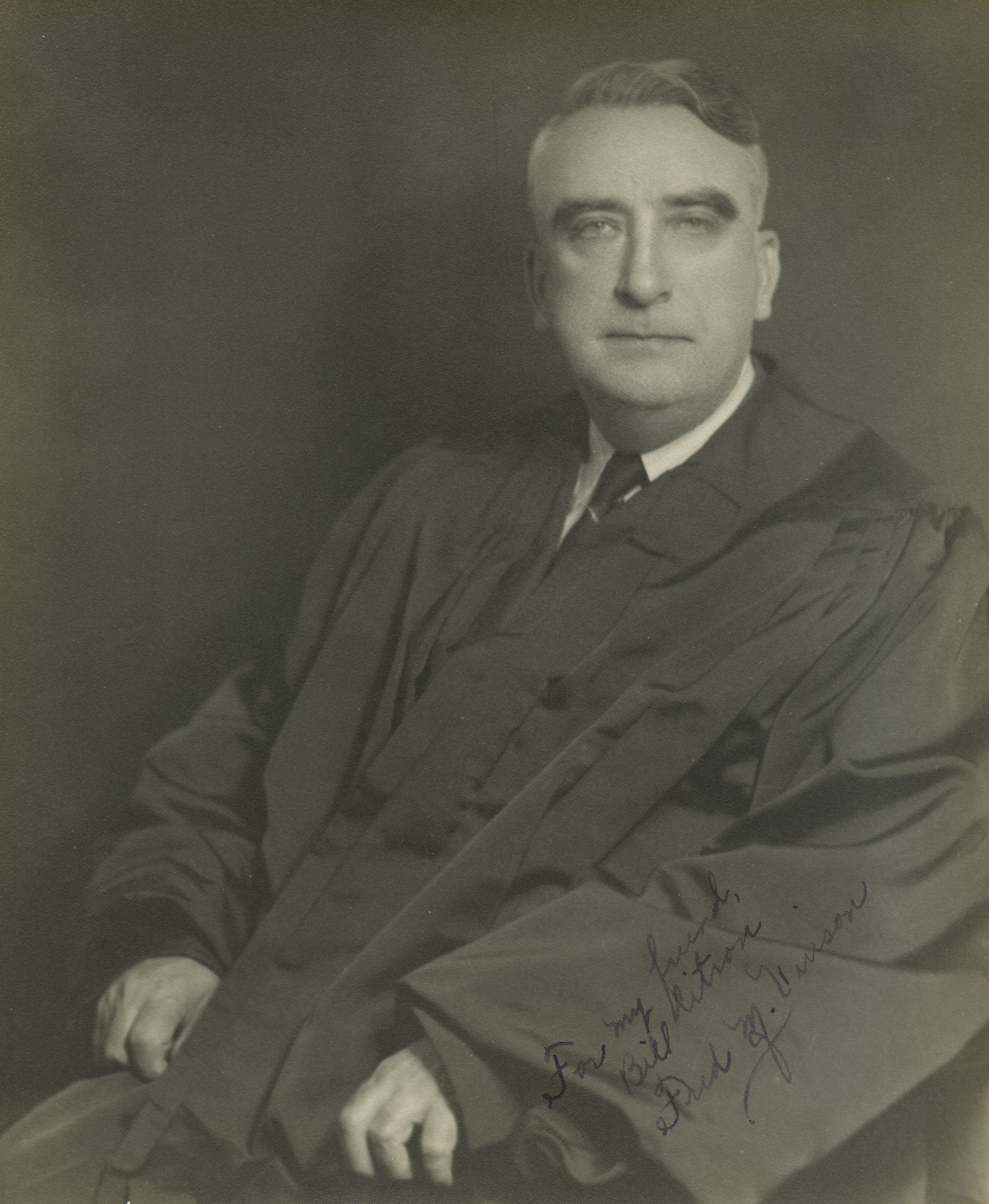
Frederick Moore Vinson, 1890-1953. Secretary of the Treasury; Chief Justice of the United States, 1946-1953. Scarce portrait photograph, inscribed and signed For my friend, / Bill Citron / Fred M. Vinson.
This 7⅜” x 8⅞” black-and-white portrait of Vinson in his judicial robe is in extra fine condition. Vinson has signed and inscribed it at the lower right across his robe.
Vinson’s autographic material is scarce. If it were not for the cache of early Vinson law practice checks that came on the market a few years ago, he would be even more scarce in all forms.
Vinson graduated from law school in 1911, when he was only 21 years old, and practiced law in Louisa, Kentucky.
A Democrat, Vinson served more than six terms in Congress before resigning in 1938 to accept appointment by President Franklin D. Roosevelt to the United States Court of Appeals for the District of Columbia Circuit. In 1942, Chief Justice Harlan Fiske Stone designated Vinson to serve also as chief judge of the United States Emergency Court of Appeals. He served in both capacities until May 1943.
On July 22, 1945, after Roosevelt's death, President Harry S. Truman appointed Vinson Secretary of the Treasury in place of Henry Morgenthau, Jr. Then, following the death of Chief Justice Stone, Truman appointed him Chief Justice of the United States. He was commissioned on June 21, 1946, and sworn in three days later.
This is an excellent photograph. It has been tipped to a larger board.
Unframed.
_____________
This item has been sold, but
click here to see other
Supreme Court items
that we are offering.